Table of contents
- Can You Be Electrocuted in a Swimming Pool?
- Why Is There Electricity in My Pool Water?
- The Two Problems Every Homeowner Needs to Understand
- What Does Pool Bonding Actually Do?
- Why Repairs Can Become So Expensive
- Pool Bonding Years
- Sometimes the Safest Recommendation Is to Close the Pool
- Modern Pool Safety Uses Multiple Layers of Protection
- Final Thoughts And Acknowledgements
Every summer, I receive calls from homeowners describing the same experience.
“There’s a little tingle in the pool.” or “I think I’m getting shocked in my pool”
Sometimes they feel it on the ladder getting into or out of the swimming pool. Sometimes it’s the handrail. And sometimes it’s only noticeable when standing on the patio with one foot in the water.
Almost every homeowner asks the same question:
“Why is my pool shocking me?” and then the inevitable “Is it dangerous?!”
The unfortunate reality is that a swimming pool should never produce any electrical sensation. Period. Under any circumstance. If you feel even the slightest tingle, there are MULTIPLE electrical safety issues that need to be investigated. The point at which you can feel a sensation is PAST the point that you can be electrocuted in the pool.
Just a brief reminder on terminology here:
Electrocution = Death by electric shock.
Shock = Voltage moving through ones body that can cause electrocution.
VERY little electricity can cause electrocution when mixed with a swimming pool. That “tingle” or slight shock, can absolutely kill you and your loved ones. Sidenote, I meet many people on a daily basis that tell me they’ve been “electrocuted.” Either they don’t understand the terminology or I need to take up mediumship. You can only be electrocuted one time. If you’re electrocuted, you don’t get the chance to tell anyone about it.
Now with my rant out of the way, the good news is that these problems can often be identified. That’s where specialty pool electricians like myself and electrical investigators (practical physicists really) come in.
Although someone calling themself an “electrician” should understand the concepts behind why electricity behaves the way it does, the reality is that the vast majority do not. Not even close. There are misconceptions and bad information everywhere despite the information age we live in.
It can not be overstated just how little electricity it takes to stop a human heart, especially when that human body is wet.
By the time you feel a tingle or realize that you’re getting shocked in your pool there are TWO definitive problems happening. You ALSO can absolutely be electrocuted (killed) despite what you may have been told. Unfortunately it happens multiple times every year.
Can You Be Electrocuted in a Swimming Pool?
Yes. And far more easily than you think.
Many people first notice what feels like “just a tingle” or a “small shock” in the pool.
Unfortunately, that small sensation is often dismissed as harmless or maybe even imaginatory.
I’m here to tell you that it isn’t. You CAN be electrocuted in your pool, around your pool, or even touching pool equipment.
Electrical conditions change throughout the day. Utility loading changes. Equipment fails. Water chemistry changes. What feels like a mild tingle today could become much more dangerous tomorrow.
Modern electrical safety requirements exist because people have been seriously injured and killed by electrical hazards around swimming pools.
A “tingle” is never normal.
Why Is There Electricity in My Pool Water?
This is where most explanations fall short. People only typically understand the simple (I’d venture to say obvious) reasons.
Homeowners often describe the problem as “electricity in the pool water.” That’s a completely reasonable description, but it usually isn’t the entire story. The electricity you feel may not actually be originating from your swimming pool equipment at all. The majority I encounter are usually not.
Possible sources include:
- Utility distribution systems
- Defective electrical equipment
- Faulted underground wiring
- Neighboring electrical system failures
- Miswiring by contractors of other items in the home or a neighbors home
In many of the investigations I’ve performed, we usually determine that the source of voltage isn’t even coming from the homeowner’s electrical system.
Instead, the utility company becomes involved because the source exists elsewhere from a point of failure.
But that only begins to address one part of the problem. For this first problem surface, another problem must exist.
The Two Problems Every Homeowner Needs to Understand
This is the single most important concept in this article.
When someone feels electricity in pool water, there are often two completely separate problems occurring at the same time.
Problem #1: Voltage Exists Somewhere It Shouldn’t
There is measurable voltage in the surrounding earth or electrical system. The electricity is trying to go back to where it came from. That means the utility (not the earth folks, it does not and has not ever worked that way).
Sometimes it’s coming from the property with the issue and trying to get back to the source and passing through the pool. Other times it’s coming from another home or system and traveling through the pool being investigated to get back to the source. And in some cases it’s coming from somewhere entirely different like a neighbors house.
Finding and correcting that source is extremely important.
But it does not automatically make the swimming pool safe. It just rectifies one of the issues.
Problem #2: The Pool Is Not Properly Bonded
This is the part almost everyone misunderstands.
Even if voltage exists in the surrounding earth, people should not normally be able to feel it while using a properly bonded swimming pool.
Equipotential bonding does not in any way eliminate voltage from the earth.
Its purpose is to ensure that conductive surfaces in and around the swimming pool remain at substantially the same electrical potential. Thus dramatically reducing dangerous voltage differences that people can be exposed to. This is why Article 680 of the National Electrical Code requires an extensive equipotential bonding system around swimming pools.
One of the biggest misconceptions I hear is:
“The utility fixed their problem, so my pool is safe now.”
No, it is not. In fact, it may now be even more dangerous.
The utility company can correct a voltage issue on its system. It cannot install the bonding system your swimming pool should already have. Those are two completely different problems.
What Does Pool Bonding Actually Do?
Many electricians that don’t deal with pools assume pool bonding is simply another ground wire or a ground rod or something else similarly not related at all. It is not.
The goal of bonding a pool is simple:
If all of the conductive parts of and around a pool remain at the same electrical potential, dangerous voltage differences are greatly reduced or eliminated. This is regardless of whether there is an issue of voltage present. Keep in mind the same potential could be
.001 V – .001V
or
1,000,000V – 1,000,000V.
Both still equal 0. 0 volts. No potential difference. No way for electrical shock or electrocution to happen (remember the difference?).
This is why bonding is one of the most important safety systems around a swimming pool.
The conductive parts the bonding system connects include:
- Pool reinforcing steel (concrete wall pools)
- Steel pool walls
- Ladders and ladder cups
- Handrails and handrail cups
- Diving board supports
- Pump motors
- Heaters
- Lights
- All metal within 5’ the pool (fences, slides, etc.)
- The required perimeter bonding grid
- The pool water itself (through an approved water bond)
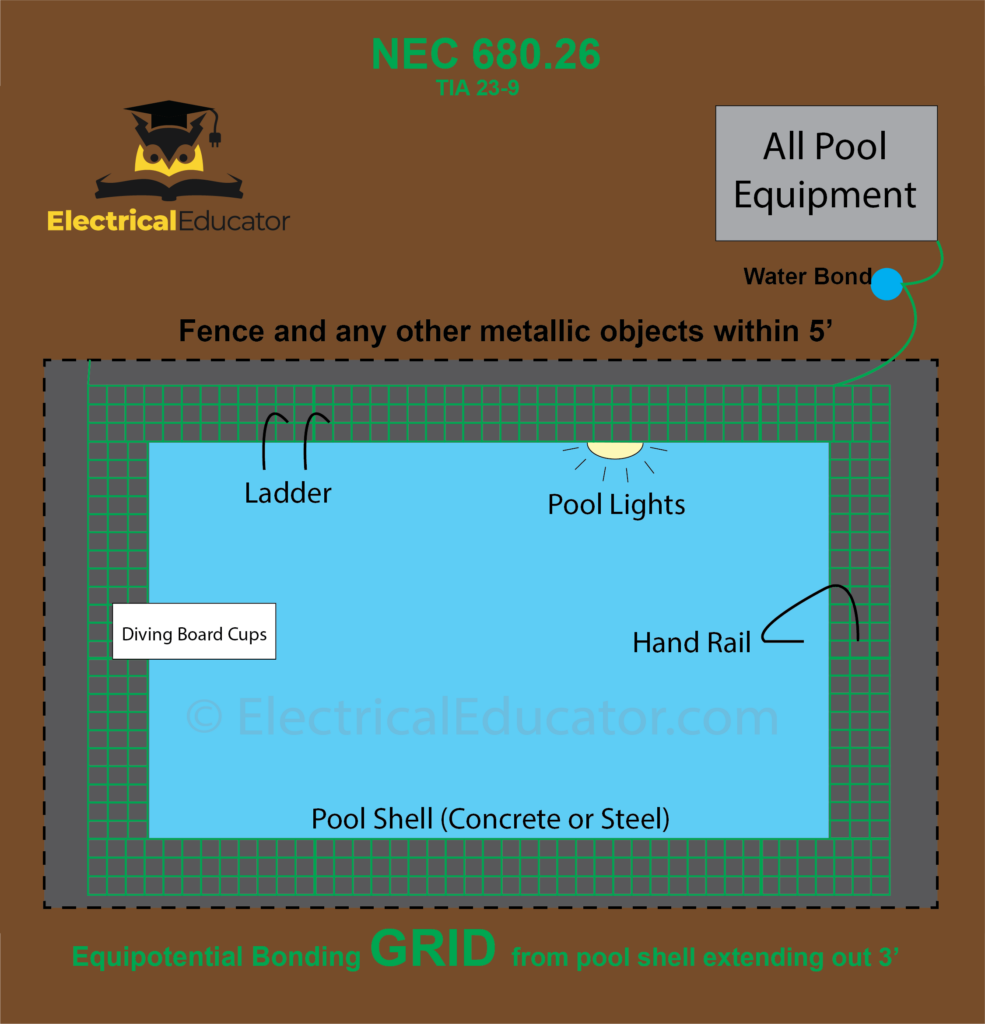
I get in to a bit more detail in this article about Equipotential Pool Bonding here.
Why Repairs Can Become So Expensive
This is often the hardest conversation I have with homeowners.
People expect the repair to involve replacing a wire or changing a breaker. While it isn’t nearly that simple my end of the repair isn’t THAT expensive. Rough numbers are about $2400-$3000 to bond an average in ground pool to todays standards. But to be able to install the bonding components correctly (removing existing concrete, deck, or pavers around pool) and then to put everything back after (new concrete, pavers, or deck) certainly can get pricey.
The repair typically requires rebuilding part of the pool area. Take a look at the grid in the following picture, everything needs to be removed to get to this point.
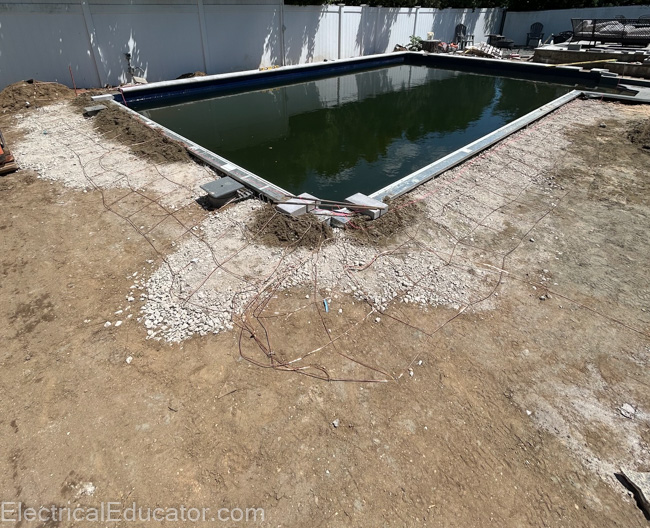
Depending on how the pool was originally constructed, repairs almost always involve:
- Removing and replacing sections of the patio
- Excavating around the pool
- Installing a perimeter bonding grid
- Bonding equipment with no present bonding.
- Installing an approved water bond.
- Upgrading old electrical equipment.
- Installing missing GFCI protection.
- Correcting grounding deficiencies.
Unfortunately, there is no shortcut if the required pool bonding system simply doesn’t exist or is damaged.
Older Pools Can Be Especially Challenging
Some older pools can be upgraded successfully. Others present significant challenges in addition to what we discussed above.
For example:
- Steel wall pools can often be bonded if the steel is accessible.
- Reinforced concrete pools generally provide reinforcing steel that can be incorporated into the bonding system.
- Fiberglass and plastic pool shells have different bonding requirements but still require proper bonding of equipment and the pool water.
- Older wood-wall or concrete block pools typically require complete replacement to achieve today’s safety standards.
Every pool must be evaluated individually.
Pool Bonding Years
I couldn’t find this anywhere on the internet and I think it will be helpful to determine the baseline bonding your pool depending on when it was built. As hesitant as I am to say this, in my experience pools pre 2005 NEC present the most issues and are the most dangerous. The 2023 NEC (post TIA) bonded pools are by far the best in terms of electrical safety.
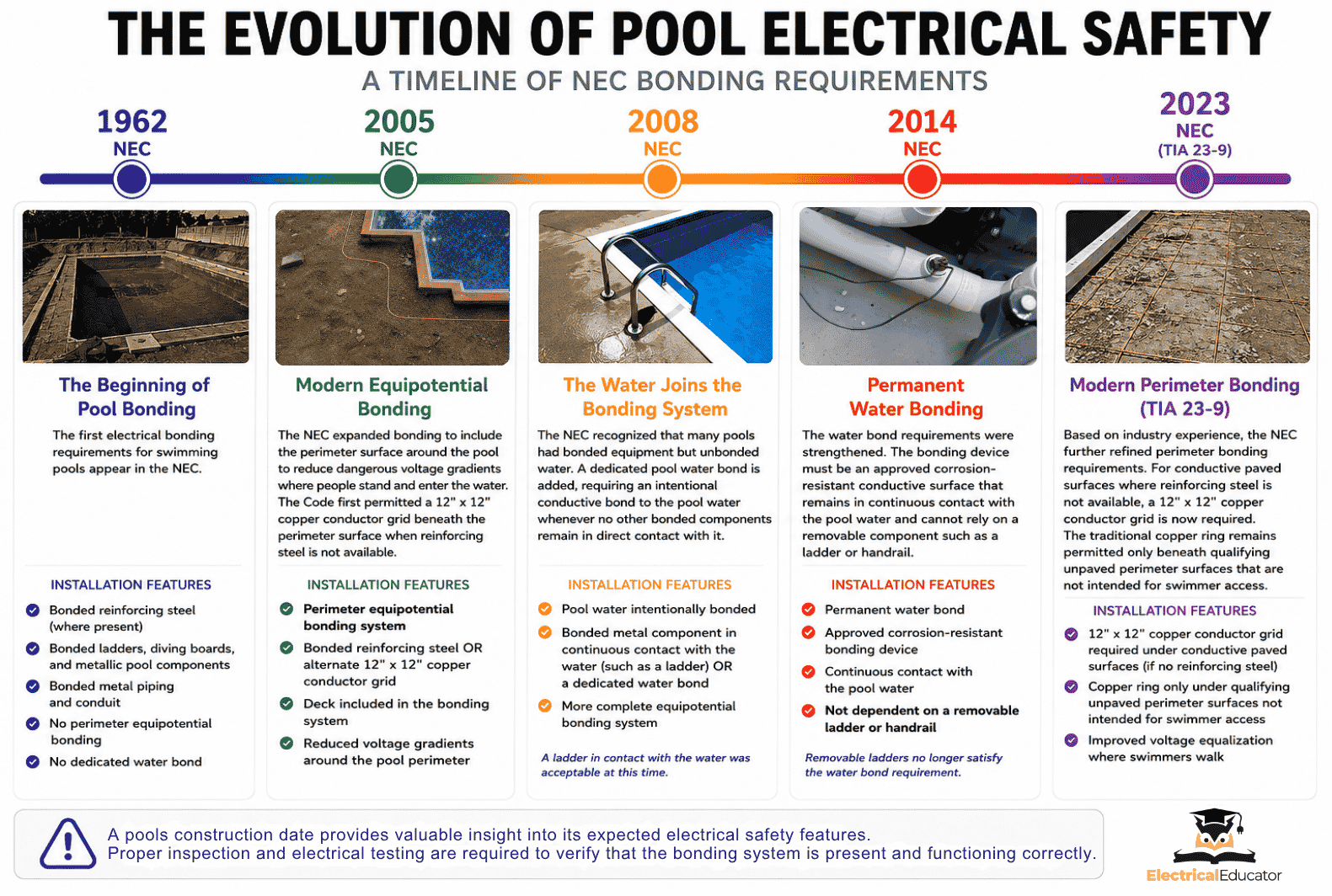
Pool Bonding Timeline:
1962 NEC: The Beginning of Pool Bonding
The first electrical bonding requirements for swimming pools appeared in the National Electrical Code. Metallic components such as reinforcing steel, conduit, piping, ladders, and other conductive parts were required to be bonded together to improve electrical safety. This marked the beginning of pool bonding, although the concept of equipotential bonding had not yet been developed.
2005 NEC: Modern Equipotential Bonding
This was one of the most significant advancements in pool electrical safety. The NEC expanded the bonding system beyond metallic components to include the perimeter surface surrounding the pool, with the goal of reducing dangerous voltage gradients where people stand and enter the water. This is also where the Code first permitted an alternate 12-inch × 12-inch copper conductor grid beneath the perimeter surface when reinforcing steel was not available.
2008 NEC: Pool Water Becomes Part of the Bonding System
The Code recognized that many pools had bonded equipment but unbonded water. Section 680.26(C) was added to require the pool water itself to be intentionally bonded whenever no bonded metal component remained in direct contact with the water. At the time, a bonded stainless steel ladder or similar bonded metal component in continuous contact with the water could satisfy this requirement.
2014 NEC: Permanent Water Bonding
The water bond requirements were strengthened to improve long-term reliability. The Code clarified that the bonding device must be an approved corrosion-resistant conductive surface that remains in continuous contact with the pool water and cannot rely on a removable component such as a ladder or handrail. This led to the widespread use of dedicated water bond fittings that remain permanently installed.
2023 TIA 23-9: Modern Perimeter Bonding
Based on industry experience, the NEC further refined the perimeter equipotential bonding requirements. For conductive paved surfaces where reinforcing steel is not available, a 12-inch × 12-inch copper conductor grid is now required. The traditional perimeter copper conductor (“bonding ring”) remains permitted only beneath qualifying unpaved perimeter surfaces that are not intended for swimmer access. These changes further improve voltage equalization where people walk around the pool.
Notice the trend? Over the past six decades, every major revision has strengthened electrical safety around swimming pools. The focus has evolved from simply bonding metallic components to creating a complete equipotential environment that includes the deck, the water, and the surrounding area. As our understanding of electrical hazards has improved, the National Electrical Code has continued to refine these requirements to better protect swimmers from dangerous voltage differences.
Understanding when a pool was built provides valuable insight into the electrical safety features that may (or may not) be present.
“It’s just a tingle.” “It’s a small shock.”
This may be the most dangerous phrase I hear. There is no acceptable amount of electric in a pool electrical shock while swimming. What one adult describes as “just a tingle” could expose a child to a much greater hazard.
Conditions change second by second. Equipment changes. Electrical systems change. Luck changes.
If your pool is shocking you, EVEN SLIGHTLY, don’t assume it’s harmless. If there is electricity in your pool water and you’re feeling anything, you need to address it immediately.
Find out why. It most likely won’t be quick or simple but you need to get your bonding repaired and the source of voltage eliminated.
Sometimes the Safest Recommendation Is to Close the Pool
We often determine that hazardous voltage exists and that bonding is not correct. Customers want to know what the least expensive fix is. As much as it pains me to say it, the pool needs to be closed until the issues can be corrected.
That recommendation is never made lightly. No swimming season is worth risking a life.
This is never a conversation homeowners want to have. For legal reasons, we send a certified letter in the mail and a have the homeowner sign a document acknowledging the pool is not safe. Unfortunately, since electricity isn’t something we humans can see, people like to pretend it’s fine even when an unsafe condition is known with certainty.
Modern Pool Safety Uses Multiple Layers of Protection
No single safety feature makes a swimming pool safe. In fact, many highly respected and well educated people such as Mike Holt will accurately argue that there is NO such thing as a completely safe electrical installation.
Modern electrical safety depends on multiple systems working together, including:
- Proper equipment grounding
- Equipotential bonding
- GFCI protection
- Correct wiring methods
- Proper pool lighting
- Proper equipment installation
- Routine inspection and maintenance
Each layer protects against different hazards. That’s why the National Electrical Code treats pool safety as an entire system rather than relying on a single protective measure.
A note on GFCI protection
People have a misconception about how GFCI protection works and why it works. Very simply a GFCI device (receptacle outlet, breaker, etc.) monitors voltage going out, and coming back in. When it senses a difference (electricity is going somewhere it should not), it trips. Fast. Really Fast. Within 6 milliseconds fast.
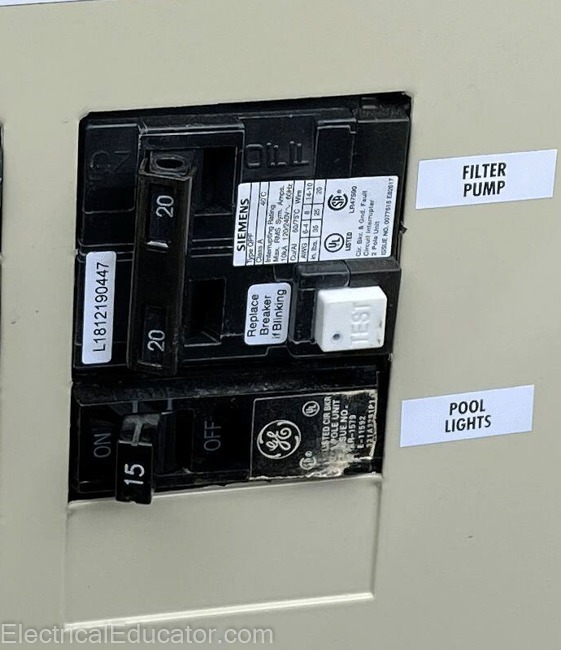
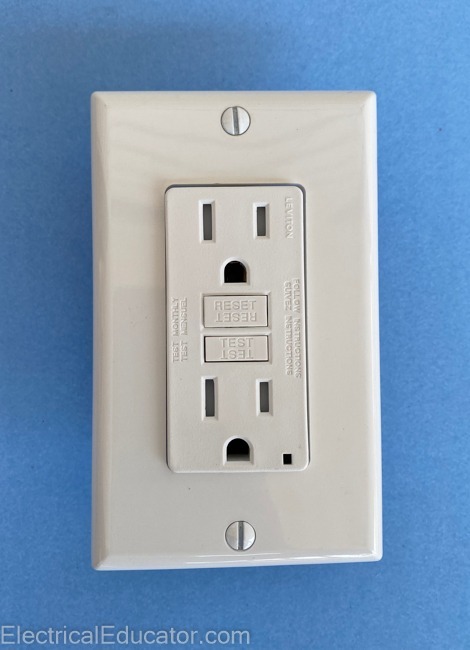
Older pools that do not have GFCI protection introduce an entire separate risk where equipment can become energized on parts that are not intended to be energized. This would then send power TO or at least THROUGH the pool. Not good. This is why GFCI protection and also proper equipment grounding is so important.
Grounding Vs. Bonding
This is almost out of the realm of homeowners but I need you to understand this. Specifically for when you talk to electricians (because too many of them do not know this).
Grounding: Grounding a system, the ground wires, all of that talk pertains to one thing and one thing only. Creating a low resistance path to trip a circuit breaker in the event of a fault. That’s it.
Equipotential Bonding: When we connect all metallic and conductive parts together to negate any potential difference (called voltage). In the trade they do mix and it confuses electricians but for the sake of what we’re talking about with pool safety they are separate entities. This is what we’re concerned with for pool installations and safety.
Confusion arises because in the code there is talk of main jumping bonding conductors, and supply side bonding, etc. This relates to grounding, to create a path to trip a circuit breaker through metallic components. This has nothing to do with equipotential bonding.
Final Thoughts And Acknowledgements
If someone tells me they feel a tingle in their swimming pool, I don’t ask how strong it is. I ask why it’s there. A tingle or even the slightest shock in a swimming pool is evidence that something is wrong.
Is the source of the voltage from the utility, faulty equipment, a neighbors home, all of the above?
But if the pool’s bonding system is missing, damaged, or ineffective, people are inevitably relying on luck instead of engineering.
Electrical safety around swimming pools isn’t about making every volt disappear.It’s about making sure dangerous voltage differences cannot exist where people are standing, touching metal, or swimming.
That’s exactly why modern bonding requirements exist and need to be adhered to.
If your pool is shocking you, don’t ignore it, don’t assume it’s “normal,” and don’t accept being told it’s “just a tingle.” Most importantly, DO NOT use the pool until both conditions have been remedied.
Your family’s safety is worth finding the real answer.
Please don’t hesitate to reach out if you need guidance on this, at the very least I can point you in the right direction. If you’re in my service area (Long Island, NY) I can help you directly.
To learn more in depth about this subject I would recommend you consult Mikeholt.com and read Electric Shock Drowning: Causes and Prevention as both were invaluable to me in my journey of learning about this material that I use daily in my profession.