Last Updated: March 2026
Water and electricity do not mix, and nowhere is that more true than around a swimming pool. Every year, serious injuries and deaths occur because of improper pool wiring, missing bonding, or outdated electrical practices that no longer meet modern code. As of 2026, many jurisdictions are enforcing the latest NEC requirements for pool bonding, GFCI protection, and equipotential bonding grids. These latest requirements are often from 2020 and 2023. Confusing I know but leave that to us electricians and inspectors to know what code cycle the jurisdiction you live in is using.
Swimming pools are one of the highest-risk electrical components in both homes and commercial settings. They combine water, metal, concrete, people, and electrical equipment, often all in direct contact. Pool electrical work is governed by some of the strictest rules in the National Electrical Code (NEC). Pool wiring is the furthest thing from a DIY project.
This guide explains:
- When you need a licensed pool electrician
- How pool bonding actually works (and why it saves lives)
- What inspectors look for and what commonly fails inspections
- How heaters, pumps, and GFCI protection fit into the system
- How newer NEC updates affect modern pool installations
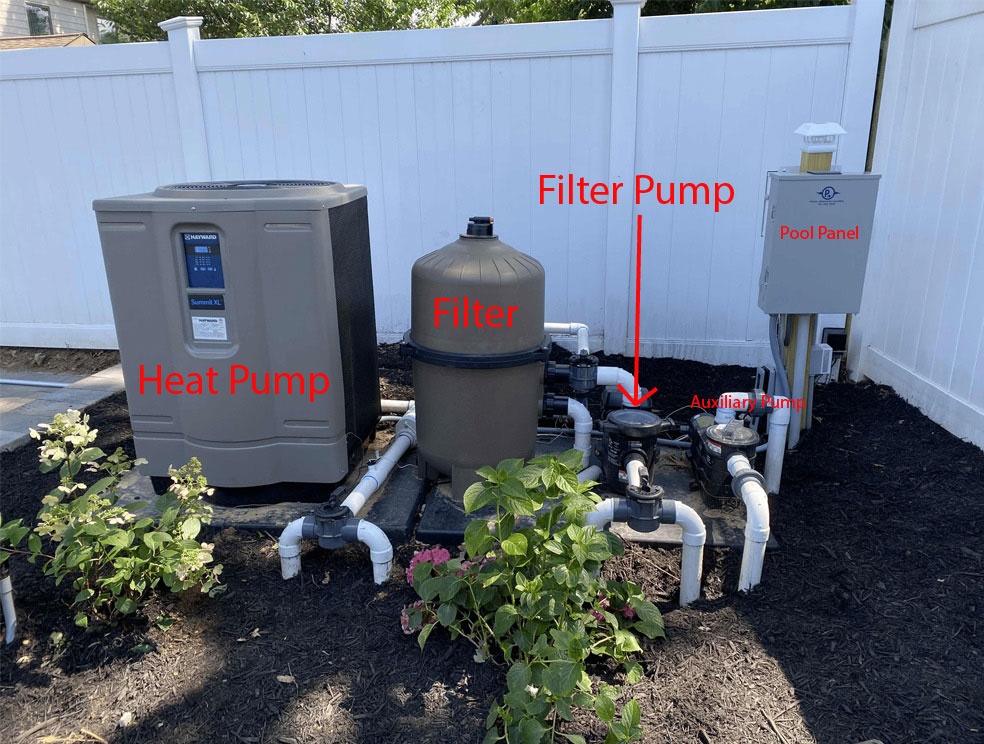
Whether you’re a homeowner planning a new pool or updating an existing one, my goal to help you understand what must be done to keep your pool safe and compliant. If youre a new pool owner and need help understanding pool components start with this picture for reference and then read on.
Do You Need a Licensed Pool Electrician?
Short answer: yes, and not just any electrician.
A “pool electrician” isn’t a separate license; it’s a master electrician who specializes in pool installations. Many otherwise excellent electricians avoid pools entirely because of the expertise required and risk involved if the work isn’t done exactly right.
Pools require:
- Specialized bonding knowledge (NOT grounding)
- Coordination with pool builders, masons, and inspectors
- Very firm understanding of NEC Article 680
- Experience with equipment clearances, GFCI rules, and bonding grids
An electrician who primarily does kitchens, basements, or commercial work may not be well-versed in pool-specific requirements. That gap in experience is where dangerous installations happen.
At minimum, an electrical contractor that specializes in pool wiring will:
- Coordinate with the pool contractor during construction
- Install proper pool panels, timers, or automation systems
- Ensure all equipment is bonded correctly
- Understand inspection expectations before the inspector ever shows up
When it comes to pools, experience isn’t optional. It’s the difference between a safe installation and a hidden hazard. If you’re trying to save money by hiring a non licensed electrician or an electrician that is not experienced in pool wiring, you’re looking for all sorts of trouble.
Pool Electrical Components That Require Wiring
Most homeowners underestimate how many parts of a pool rely on electricity. Even a “simple” pool can have several separate electrical systems working together. Here are the common components requiring electricity.
Pool Electrical Panel or Timer
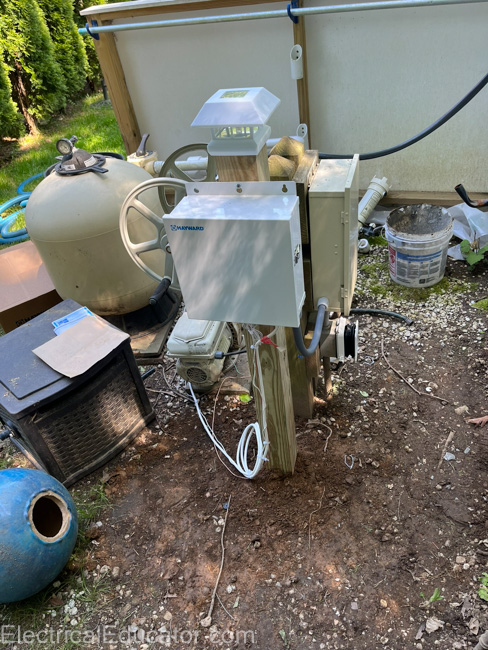
Power must be safely brought from the home’s main electrical service to the pool area. This is typically done using a dedicated pool subpanel or timer, often ranging from 30A to 100A depending on equipment. Pictured below is a classic “pool panel” with an integrated timer. Today with Variable Speed Pumps, timers are no longer needed.
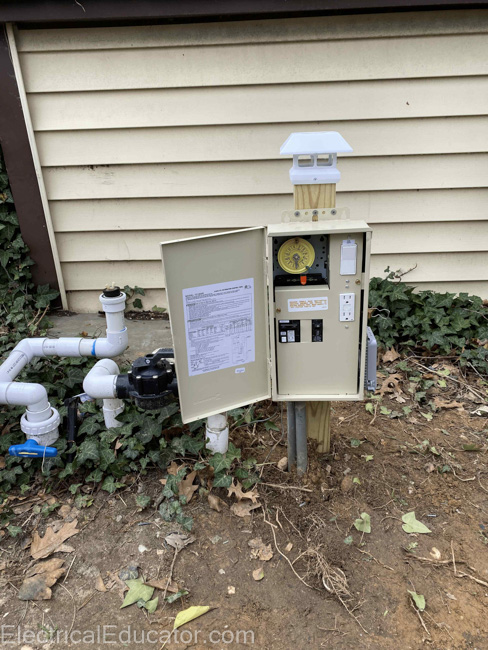
This portion of the install usually involves:
- Trenching
- Conduit installation
- Underground wiring
- Disconnecting means at the pool equipment
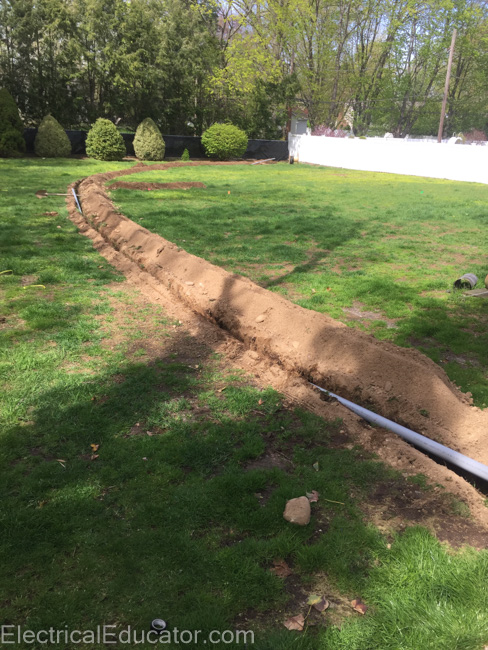
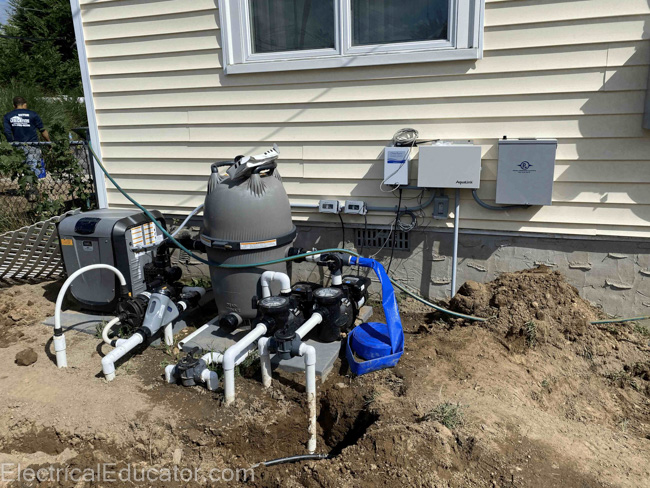
This is one of the most invasive and most critical parts of the installation. Here are some pictures of a typical trench install where the pool equipment and electric for the pool equipment is located far from the house (where the main electric panel is located):


In other instances, the pool equipment is located near the home which can facilitate a more simple installation:
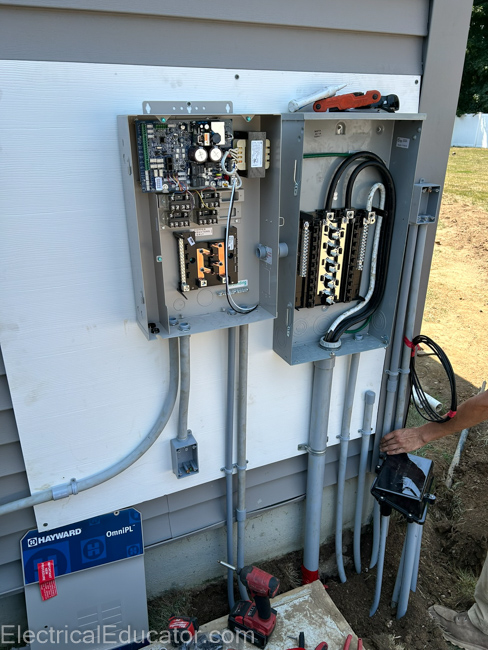
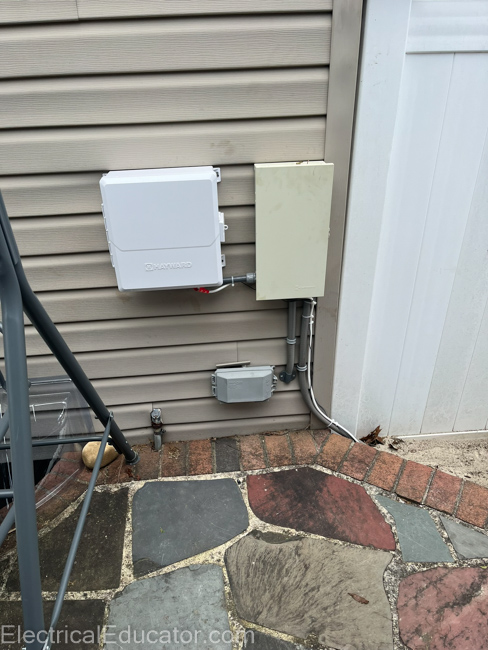
Pool Pumps
Every pool has at least one circulation pump, and many have additional pumps for waterfalls, slides, or water features.
Pump requirements typically include:
- GFCI protection
- Proper bonding
- Corded connection made by an electrician (on the pump)
- Automation wiring (when applicable)
Variable-speed pumps add another layer of complexity and must be installed exactly per manufacturer requirements.
Pool Lights
Pool lighting is extremely common on modern pools and must be handled carefully.
Lighting installations involve:
- GFCI protection
- Proper switching and control
- Installation of the deck box (junction above water line where electrical connections are made)
- Coordination with the pool contractor (who installs the fixture itself and the conduit to the deck box)
Improperly wired pool lights are a frequent cause of failed inspections and unsafe conditions.
Pool Heaters
Pool heaters fall into two categories:
- Gas heaters (minimal electrical load)
- Electric heat pumps (often 50A circuits or larger)
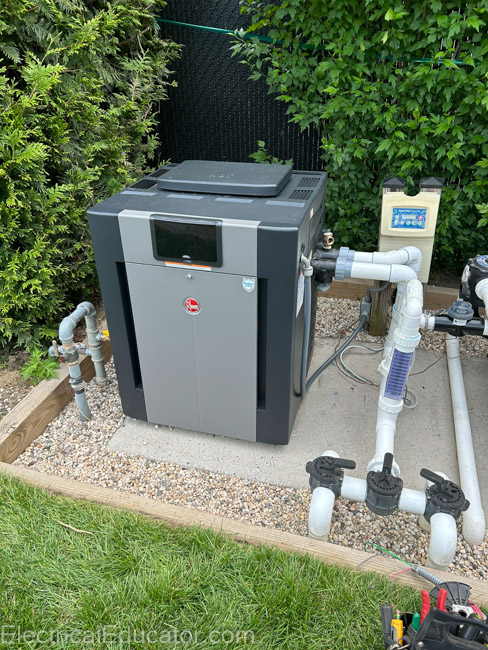
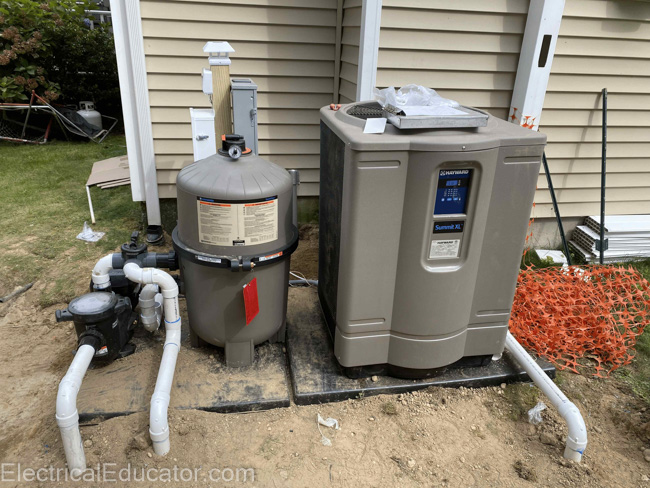
Both require GFCI protection, bonding, and disconnects
Salt Systems & Automation
Salt chlorine generators and automation systems make pool ownership easier in many ways. Instead of strictly mechanical means to control your pool pump, heater, lights, etc. you can have these set up to an automation system. Common automation systems are made by Hayward, Jandy, and Pentair. In my experience all are great and just have slightly different features. The caveat here is that it adds a bit of complexity for the electrical install. No big deal for an electrician that specializes in this but definitely over the heads of those who do not.
These systems require GFCI protection, bonding, control wiring, and some other manufacturer specific requirements that we won’t get in to here.
Automation systems from manufacturers like Hayward, Pentair, and Jandy integrate pumps, lights, heaters, and more into a single control platform. They all have great apps that work on both iphone and android devices. From there you can set the pump schedule, turn the heater on and off, control the lighting, and more. Once the automation system is installed, other things like landscape lighting can be controlled from it as well.
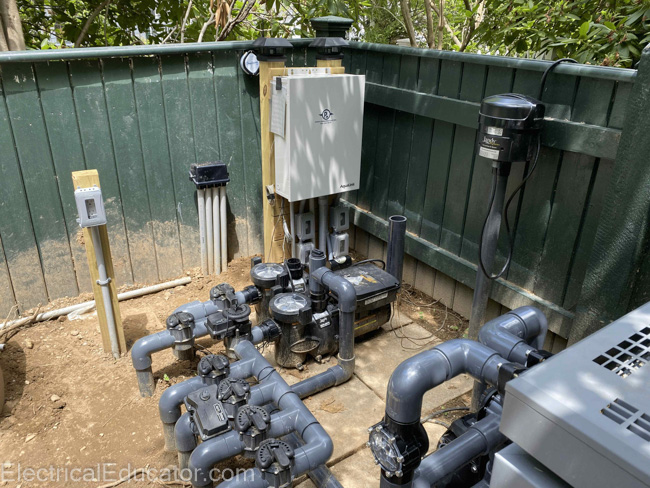
Pool Bonding Explained (Equipotential Bonding)
Pool bonding, technically called equipotential bonding, exists to prevent shock and electrocution by eliminating voltage differences around the pool area.
Many people incorrectly call this “grounding,” but bonding serves a very different purpose. If someone tells you they’re going to “ground” your pool, please call someone else. I can’t think of much that’s more in the ground than a pool!
What Pool Bonding Actually Does
Voltage only exists as a difference in electrical potential. If everything around the pool is at the same potential, dangerous current cannot flow through a person.
A simple analogy:
- A bird can sit safely on a high-voltage wire because both feet are at the same voltage
- The danger happens when two different voltages (or zero voltage) are touched at once
Around a pool, stray voltage can enter the ground due to underground utility faults (most common), damaged or incorrect wiring, and neighboring electrical issues.
If a pool is not properly bonded, that stray voltage can pass through the pool shell, deck, water, or metal components, placing swimmers directly in the path. This unfortunately can quickly lead to electrocution.
A properly bonded pool ensures all conductive parts rise and fall together electrically, eliminating dangerous voltage gradients.
What Needs to Be Bonded Around a Pool
The NEC requires that all conductive parts associated with a pool be bonded together using a solid copper bonding conductor.
This typically includes:
- Pool shell reinforcing steel or bonding grid
- Perimeter surfaces around the pool
- Metal pool walls or steel panels
- Light niches (when present)
- Ladders, handrails, diving board supports
- Pumps, heaters, and pool equipment
- Fixed metal objects within a specified distance of the pool
- Pool water, yes you read that correctly (via approved bonding fittings)
This is not an area open to interpretation and it is one of the most common places where pools fail inspection. Unfortunately when there are no inspections this is the part where people get hurt and can get electrocuted.
Pool Bonding Diagram (Steel Shells, Rebar, Equipment)
Diagrams are often the clearest way to understand how pool bonding works. Here is the latest in how a pool needs to be bonded. Note the GRID. The days of a bonding RING or single points are over. Everything labeled in black is what needs to be bonded. The green shows the #8 copper wire and grid.
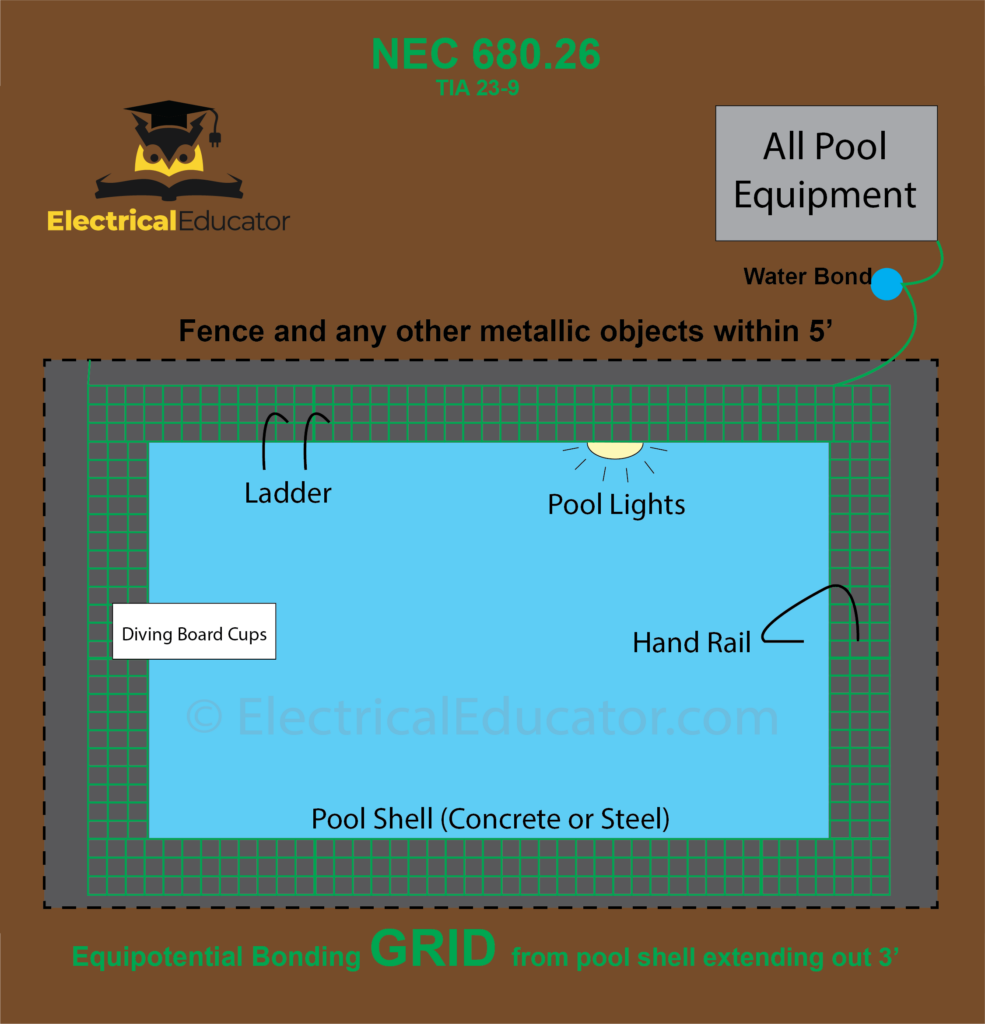
A proper pool bonding system typically shows:
- A continuous bonding conductor
- Connections to the pool shell (steel shell pools) or reinforcing steel (concrete wall pools)
- Bonding points at pump, heater, salt system, lights, any metal objects within 5′ of the inside wall of the pool, anything specified by manufacturer to be bonded.
- A perimeter bonding system around the pool. This is now a grid where in the past a single #8 copper conductor was permissible in many installations.
For whatever reason we see masons, pool companies, and uneducated “electricians” bonding pools incorrectly, some of the most common errors are:
- Missing perimeter bonding
- Broken or discontinuous bonding conductors
- Forgetting bonding altogether (needs to be under pavers)
- Equipment bonded but pool shell/grid ignored
- Use of a ground rod (don’t confuse grounding and bonding)
For a more detailed breakdown of what needs to be bonded and how, take a look here.
Electric Pool Heaters & GFCI Protection
GFCI protection is one of the most misunderstood aspects of pool electrical systems, especially when it comes to heaters.
Do Pool Heaters Need GFCI Protection?
Short answer YES, even if older installations didn’t require it.
GFCI protection is required for:
- Pool pump circuits
- Pool equipment outlets
- Underwater lighting
- Exterior outlets
- Equipment required by manufacturer instructions
- Pretty much anything powered by electricity outside needs GFCI protection
Since newer NEC editions require GFCI protection for outdoor outlets, and heater disconnects qualify as outlets, modern pool heaters typically require GFCI protection even if they aren’t “pumping” water.
See my more detailed article on GFCI protection and pool heaters here
Why Pool Heaters Trip GFCIs
Much less an issue today as it was in the past, but GFCI’s can trip for many reasons. Don’t forget the purpose of them is to keep us safe. Some common issues that can lead to “nuisance” tripping are:
- Moisture intrusion
- Incorrect GFCI breaker for panel
- Improper grounding or bonding
- Shared neutrals
- Aging or faulty equipment
Correct installation of new equipment dramatically reduces and essentially eliminates nuisance tripping.
Common Pool Electrical Inspection Failures
Inspectors see the same problems over and over. The scary part is that a pool typically only needs to be inspected when it’s new or there is an open permit. Many pool renovations never get an inspection. These are the most common points of failure when a licensed electrician does not bond a pool:
- Missing or incomplete bonding grids
- Incorrect bonding conductor size
- Improper GFCI protection
- Incorrect disconnect placement
- Equipment not bonded
- Deck boxes or lighting bonded incorrectly
Most of these failures are preventable when a qualified pool electrician is involved early in the project.
Final Thoughts on Pool Electrical Safety
Pools are one of the greatest additions to a home but only when they are built safely.
Proper pool electrical work makes maintaining and owning a pool easy, prevents shock hazards, and keeps everyone safe during the swimming season.
If you are building a pool, renovating equipment, or unsure whether your existing pool is bonded correctly, have it evaluated by a licensed electrician who specializes in pools.
If you need help finding a qualified professional, visit the National Electrical Registry to locate electricians with verified pool experience.
A safe swimming season starts with proper electrical work. Feel free to reach out with any questions or for clarification on any of the above.