
HomeServe Reviews: What Homeowners Should Know (From a Licensed Electrician)
Home warranty programs like HomeServe come up a lot when people start searching for HomeServe reviews. You pay a monthly fee, something breaks, and a contractor shows up to fix it. And to be fair — the concept itself isn’t bad.
We’ve worked inside this system as licensed electrical contractors. After several years, one thing became clear:
The idea works. The execution is where things start to break down.
What Is HomeServe and How Does It Work?
HomeServe sells repair plans that cover systems like electrical, plumbing, and HVAC. When something fails, they dispatch a contractor to diagnose and repair the issue.
From a homeowner’s perspective, it feels simple. You pay a monthly fee, call when something breaks, and someone comes out to fix it. In some cases, it works exactly like that.
This is the version of events you’ll typically see reflected in most HomeServe reviews online.
Our Experience (2019–2024)
Many HomeServe reviews focus on the homeowner experience, but fewer explain what happens on the contractor side. We worked with HomeServe from 2019 through 2024 and completed 35 service calls during that time. At first, we saw it as a potential source of steady work that could help fill gaps in our schedule.
Over time, patterns started to emerge.
Real Job Examples From the Field
To give a clearer picture, here are real situations we encountered while working inside the system.
One of the more common calls we received was for “partial power loss.” On one job, we arrived and found an HVAC company already on site. They had cut electrical wiring and knew exactly what caused the issue, but the situation had been submitted as a new electrical failure under the warranty. The expectation was that we would run a new line under the claim essentially at a monetary loss to us. No thank you.
On another “partial power” call, we arrived at a house that had been completely gutted down to the studs. The homeowner tried to have us rewire the entire house under the warranty and even offered incentives to make it happen. This isn’t by any means HomeServe’s fault, but it shows how these systems can attract misuse when expectations don’t match reality.
“Aborts”
We also dealt with frequent “abort” calls. These happen when a job gets scheduled, the technician arrives, and no one is home or the job is nowhere near what was described. In those cases, the contractor receives about $50. That might sound reasonable, but it doesn’t cover the real cost. Travel time, fuel, labor, and lost opportunity all add up quickly. We had technicians drive out, wait 10 to 15 minutes, and leave with nothing accomplished while still needing to be reassigned elsewhere.
One of the more frustrating situations involved a service upgrade. We went on site, diagnosed the issue, secured approval, ordered materials, and scheduled the work for the very next morning. When we showed up to do the job, another contractor was already there getting started. Despite handling the diagnostic and planning, we only received limited compensation for our time.
To be fair, not every experience was negative. In one case, part of a home lost power and we traced the problem to a wire that rodents had damaged in the attic. We installed junction boxes and re-fed the circuit properly. That job moved smoothly, and we received fair compensation.
We also completed smaller approved repairs, like replacing receptacles that had been painted over. While technically valid, it raises the question of whether the system always focuses on the types of problems it was designed to solve.
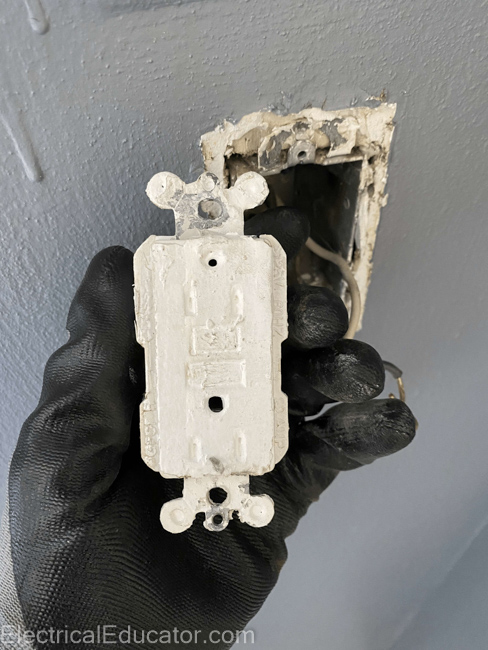
These types of situations don’t always show up in standard HomeServe reviews, but they play a major role in how the system actually functions.
Customer Behavior (Something Most People Don’t See)
One of the biggest surprises was how often the reported issue didn’t match the actual problem. We regularly saw customers request unrelated work, submit inaccurate claims, or push for services that weren’t covered.
In some cases, customers even threatened negative reviews if we didn’t comply.
Based on our experience, a significant portion of service calls involved some level of mismatch between what was reported and what was actually needed.
This puts contractors in a difficult position. We’re the ones standing in the home, but we don’t control the rules.
The Contractor Side (My first hand homeserve review)
From the contractor perspective, everything runs through a structured system. Work follows fixed pricing, approvals often dictate what can be done, and administrative requirements play a major role.
We dealt with delayed responses from representatives, unclear approvals, and a time-consuming process for entering work orders just to get paid. If something isn’t documented correctly, it can affect payment.
We also saw jobs get classified as “aborts” even when the situation didn’t fully fit that category. Regardless, the compensation stayed capped. For us, it was not enough to cover our operating expenses and often became frustrating because they got to chose how a job was classified and thus what were would get paid.
Communication added another layer of difficulty. In multiple cases, representatives were hard to reach or didn’t respond in a timely manner, which slowed down active jobs. Again, our employees are paid hourly so when the clock moves and we don’t that equals us losing money.
The Hidden Cost: Insurance and Overhead
To participate in programs like this, contractors must carry significant insurance, including multi-million dollar general liability and umbrella policies. For a legitimate electrical contractor, that level of coverage can easily cost $60,000 to $70,000 per year. It goes without saying that one needs to be hold (and pay for!) a master electricians license to qualify to do these jobs.
That’s before factoring in payroll, vehicles, tools, and administrative overhead.
When you compare those costs to the compensation structure often based on fixed rates or relatively low hourly pricing, a clear disconnect appears.
The program requires a high level of professionalism and responsibility, but the pricing often aligns more closely with lower-overhead operations.
Why Many Electricians Don’t Participate
When you read through HomeServe reviews, you’ll often see mixed feedback and much of that comes down to how the system operates behind the scenes. When you combine fixed pricing, administrative burden, approval delays, payment uncertainty, and high overhead, the numbers often don’t work.
In many cases, it’s not just about lower profit. It becomes a question of opportunity cost. Time spent on these jobs replaces time that could go toward higher-quality, direct customer work.
When HomeServe Might Make Sense
These programs can still work in certain situations. Minor repairs, straightforward issues, and homeowners looking for a budget-friendly option may have a good experience.
For contractors, it may make sense for newer businesses, companies with excess capacity, or operations with lower overhead.
Considering Becoming a Home Warranty Contractor?
If you’re an electrician thinking about signing up, it’s important to understand both sides. The idea of steady work without marketing can be appealing, but the structure includes fixed pricing, administrative requirements, and variability in payment.
Take the time to review the terms carefully and run the numbers before committing. Seek out other contractors in the area that work for the home warranty company, ask for references. Get a good handle on how it works.
Final Thoughts
If you’re researching HomeServe reviews before making a decision as a consumer or contractor, it’s important to understand both sides of the process. HomeServe and similar home warranty programs are not inherently bad, but they’re not always a perfect solution either.
The biggest misconception is that they guarantee fast, high-quality repairs. In reality, the outcome depends heavily on the contractor, the system, and how everything operates behind the scenes.
After working within the system from 2019 to 2024 and completing 35 service calls, we chose to step away. The issue wasn’t the idea itself, it was the structure and that structure did not fit the way we operate our business.
It simply didn’t align with how any profitable licensed, insured electrical contractor operates.
If you’re dealing with a serious electrical issue, it’s often worth working directly with a qualified electrician who can diagnose and fix the problem without limitations. If you’re looking for peace of mind as insurance, Homeserve might be a good choice.